Crochet pattern scale calculator
Common questions
Can I just multiply every stitch count?
For a plain fabric, largely yes. For anything with a repeat, no: the new count has to stay a multiple of the repeat or the pattern stops lining up at the end of the round. That is why this page takes the repeat as well as the count and rounds to a number that still works.
How do I make an amigurumi bigger?
Two ways, and they are not equivalent. A heavier yarn with a bigger hook keeps every stitch count identical and scales the whole thing, which is the safe route. Adding increase rounds changes the shape as well as the size, and for a piece that has to be stuffed and sewn, shape changes compound.
What if my row gauge is off but my stitch gauge is right?
Common in crochet and usually not worth fighting. Work to the measurement the pattern gives rather than to its row count, and check the length as you go. Where a pattern shapes on specific rows, recalculate those positions from your own row gauge.
I am using a different yarn on an amigurumi. What size safety eyes or nose do I need?
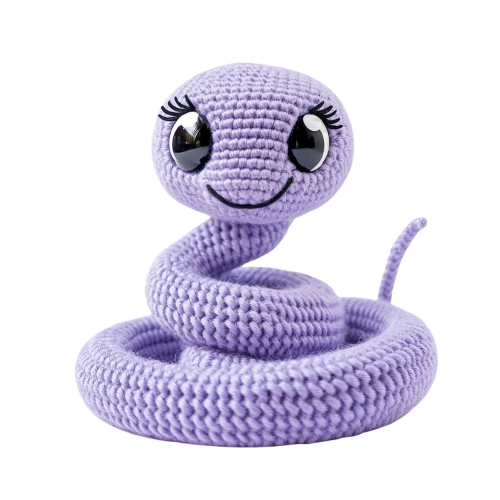
The parts scale with the piece, in a straight line. Work out how much smaller or bigger your version comes out (your stitches per 10 cm against the pattern's, or your finished height against the designer's) and multiply the eye or nose size by the same figure. A 22 mm nose on a super bulky piece becomes roughly 12 to 14 mm in worsted, so buy the nearest stocked size, 12 or 15 mm, and hold it against the head before you stuff. Safety eyes only go in once, so test on the unstuffed piece.
Does scaling change how much yarn I need?
Yes, and not in a straight line. Yarn use follows area, so a piece made 20 percent wider and 20 percent longer needs roughly 44 percent more yarn, not 20. Run the new finished size through the yardage calculator before buying.
Wovely holds the pattern and marks off rows as you go, so a resized project does not turn into a page of crossings-out. This calculator stays free whether you sign up or not.